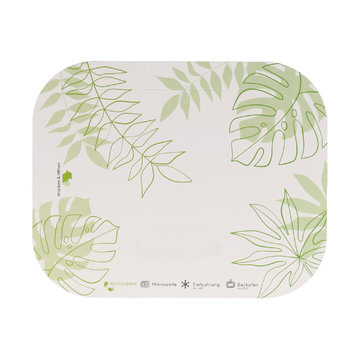
Sealable trays enable the portioned packaging of food for restaurants, catering services, cafeterias, meal delivery services, and takeout. At Nette Deutschland, you’ll find a variety of designs made from PP, XPS, and C-PET-coated hard paper —available in single-compartment or multi-compartment versions, depending on the product.
Matching sealing films and lid solutions are also available for each packaging system. The material, temperature range, and closure type should be selected to suit the specific tray and application.
Sealable trays are used when food is to be portioned, prepared, stored, or packaged for takeout. The product line includes a variety of sizes, materials, and compartment configurations, allowing the packaging to be tailored to portion size, food type, and operational workflows.
Typical applications include restaurants, snack bars, catering companies, cafeterias, institutional food service, meal delivery services, butcher shops, delis, and delivery services.
Our PP sealable trays are made of polypropylene (PP) and are available in undivided, 2-compartment, and 3-compartment designs.
The various compartment configurations allow complete meals to be portioned either on a single, continuous surface or with separate meal components. Depending on the product, they are designed for use in the microwave as well as for storage in refrigerated and frozen environments. Specific temperature conditions can be found in the product specifications.
Another product group consists of C-PET-coated hard paper sealing trays. They combine a paper-based tray body with a functional PET layer.
The series includes various filling volumes as well as single-compartment and multi-compartment variants. Depending on the design, the trays are intended for refrigerated and frozen storage, hot filling, and elevated usage temperatures. The specific conditions apply as indicated for each individual product.
The XPS sealable trays are made of extruded polystyrene foam and are available in various sizes as well as in single-compartment, two-compartment, and three-compartment versions.
The different dimensions and compartment configurations allow you to choose the option that best fits your portion size and menu composition. PE or aluminum sealing films are available as sealing solutions for the appropriate variants.
Sealing films in various designs are available for sealing trays suitable for machine sealing.
The product range includes, among other things, transparent, peelable composite films as well as aluminum sealing film. Depending on the variant, films are designed for different tray materials such as PP, PS, A-PET, C-PET, or PET-G.
When making your selection, the tray material, film width, sealing machine, and sealing tool should all be coordinated. Therefore, a film should not be selected based solely on its roll width.
The appropriate division depends on the intended menu. An undivided sealing tray offers a continuous usable surface for a single dish or related food items. With 2-section trays, for example, the main course and side dish can be separated from one another.
3-compartment sealing trays offer additional sections for multi-part menu items. They are used, for example, by meal delivery services, cafeterias, and in institutional food service.
In addition to the required capacity, factors such as material, compartment layout, temperature range, storage conditions, and closure system should be taken into account when making a selection.
Not every sealable tray has the same properties. Therefore, statements regarding microwave safety, freezing, or high temperatures apply only to items specifically labeled as such.
The product line is designed specifically for restaurants, snack bars, catering companies, cafeterias, schools, commercial kitchens, meal delivery services, butcher shops, delis, and delivery services. A variety of filling volumes and compartment configurations allow you to select the right option for your specific menu offerings.
You can find additional packaging options for prepared and portioned meals in our parent category, Meal Trays.
Depending on the application, aluminum trays, meal trays made from bagasse, or soup cups and bowls may also be suitable alternatives.
The current product range includes, among other things, sealable trays made of PP and XPS, as well as hard paper sealable trays with a C-PET coating. The materials have different properties and applications.
No. Microwave safety depends on the material and the specific product. Depending on the design, PP sealable trays may be intended for use in the microwave. The respective product specifications are always decisive.
No. Freezer suitability also varies by product. Some PP and hard paper versions are designed for use in the freezer, while different conditions apply to other trays.
To seal a tray, you need a suitable sealing tray, a sealing film compatible with the tray material, and a suitable sealing device or tool.
That depends, among other things, on the tray material. Depending on the film type, materials such as PP, PS, A-PET, C-PET, or PET-G can be sealed. Additionally, the film width and sealing device must be compatible.