 Free service 0551 - 999 63 90
 location & Markets
 newsletter registration
 print Service
 Deutsch
  English
- Home
- To Go packaging
- Sushi-Verpackungen (3)
- To Go packaging
- Burger Box
- Reusable To Go: Sustainable solutions for the food service industry
- Döner Box
- Asia Boxen
- Menu trays
- Menu boxes
- Pizza boxes
- Suppenbehälter to go
- Sushi-Verpackungen
- Disposable tableware
- Disposable cutlery
- Wrapping paper and fresh pack
- Papers and films
- Fast food & snack packaging
- Pastry packaging
- Cups & bowls
- Backtrays & Backformen
Sushi-Verpackungen
Sushi packaging is the perfect solution for sushi restaurants, Asian takeout spots, delivery services, deli counters, and catering businesses. Our product range includes black and brown sushi boxes with viewing windows, convenient sauce cups, and reusable sushi packaging for professional reusable concepts. Depending on the design, the various sizes are suitable for maki, nigiri, sashimi, inside-out rolls, and complete sushi menus.
Many of our sushi boxes are available in multiple variants. Be sure to open the desired product family to compare available dimensions and sales units. Also, check whether lids or viewing windows are already included with the packaging. Discover the right sushi packaging now for takeout, refrigerated display cases, delivery services, and catering.
Which sushi packaging is right for your menu?
The right sushi packaging depends on the size of the menu, the arrangement of the dishes, and the planned distribution channel. For just a few pieces of maki or nigiri, you’ll need less space than for an extensive sushi menu featuring sashimi, inside-out rolls, and side dishes. Product presentation also plays an important role: Black sushi boxes create a strong contrast, while brown packaging with a kraft paper look achieves a natural and understated effect.
When making your selection, pay particular attention to dimensions, interior height, material, and closure type. For delivery and takeout, sushi boxes should close securely, be transportable in a horizontal position, and be protected against slipping. For refrigerated display cases and self-service, models with viewing windows are ideal, as customers can see the contents before opening the box.
Selecting Sushi Boxes by Size
The right size cannot be determined solely by the number of pieces. Maki, nigiri, sashimi, and inside-out rolls differ significantly in shape, height, and space requirements. Garnishes, wasabi, ginger, and divider sheets also require additional space.
Small sushi boxes are suitable for single servings, a few pieces of nigiri, or a single maki roll. Medium-sized boxes are designed for classic mixed platters. Large boxes offer space for multiple rolls, extensive assortments, and additional sides. Check the specific dimensions on the respective product detail page and perform a packing test when creating new menus. Many of our sushi packaging options come in different variants, so multiple sizes may be available within a single product family.
Black or brown sushi boxes?
Black sushi packaging
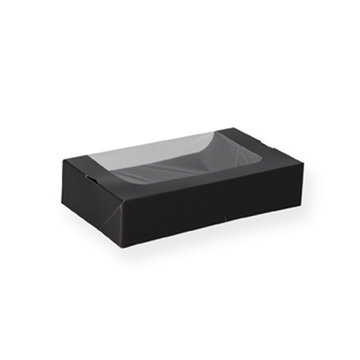
Black sushi boxes create a striking contrast to rice, fish, vegetables, and colorful toppings. This makes maki, nigiri, and sashimi stand out particularly well. They are a good fit for modern sushi restaurants, delivery services, and catering concepts that emphasize high-quality food presentation.
Brown sushi packaging
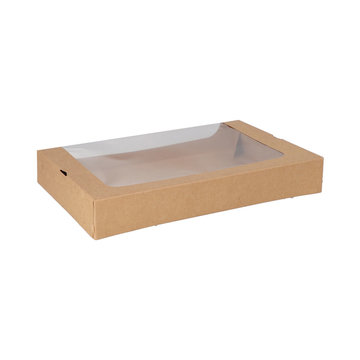
Brown sushi boxes with a kraft paper look convey a natural, simple design. They’re suitable for Asian snack bars, deli counters, street food vendors, and businesses with minimalist packaging designs.
However, the color alone says nothing about recyclability, biodegradability, or environmental impact. The decisive factors are the material composition, coating, and the material of the viewing window. Therefore, always refer to the information on the respective product page.
Sushi Packaging with Viewing Windows
A transparent window enhances the appetizing presentation and makes it easier to identify different orders. Staff can verify that the correct meal has been packaged, while customers can see the contents before opening the box.
Boxes with viewing windows are particularly suitable for sushi restaurants with takeout service, delivery services, deli and refrigerated counters, supermarkets, catering, and pre-portioned cafeteria offerings. Depending on the design, the window may be made of a different material than the base of the container. A box with a plastic window should therefore not be generally labeled as plastic-free or biodegradable.
Single-use or reusable sushi packaging?
Whether a single-use or reusable solution is more suitable depends on the business model and operational processes.
Single-use sushi boxes
Disposable packaging is suitable for delivery services, spontaneous takeout orders, catering, and events without a formal return system. Once distributed, the containers do not need to be returned, stored, or washed. This simplifies their use with a rotating customer base and larger delivery areas.
Reusable Sushi Boxes
Reusable solutions are a good option if you can set up your own return or deposit system. This applies, for example, to cafeterias, corporate dining, campus food service, and sushi restaurants with many regular customers.
When making your decision, consider acquisition costs, the required number of containers in circulation, the return rate, washing capacity, storage space, and potential losses. You can find suitable reusable solutions in our circ reusable tableware line for restaurants and takeout. Information regarding cleaning, temperature resistance, and usage must be checked for each specific product.
Key Selection Criteria at a Glance
When making a purchase, don’t just compare color and external dimensions. For a smooth workflow, the sales unit, stackability, closure, and material combination are also important. Small sales units are suitable for testing new menus or for lower demand. Larger sets are more cost-effective for restaurants, delivery services, and catering businesses with regular usage.
Also check whether the base and lid—or viewing window—are already supplied together. With some packaging systems, individual components may be offered separately. In this case, pay attention to the product series, dimensions, and item assignment. Only components that are designed to fit together can be closed reliably.
Stackability is also important for day-to-day operations. Empty boxes should be storable in a way that saves as much space as possible. Filled containers, on the other hand, should only be stacked on top of one another if the lids and structure are sufficiently sturdy. Test new packaging with your actual sushi menus before ordering larger quantities.
Packing and Transporting Sushi Safely
Sushi is sensitive to pressure, movement, and temperature fluctuations. In addition to proper packaging, filling and transport are therefore also crucial.
- Choose a box in which the sushi pieces fit snugly but are not squashed.
- Arrange the maki, nigiri, and sashimi so that they do not shift.
- Close any viewing windows or lids completely.
- Transport filled sushi boxes horizontally.
- Stack the boxes only if the design allows for it.
- Pack soy sauce and other liquid condiments separately.
- Protect the sushi from heat and maintain the cold chain.
Depending on the menu, wasabi and pickled ginger can be placed directly in the box or packed separately. Liquid sauces should always be transported in their own container to prevent the sushi from becoming soggy and to keep the packaging clean.
Sauce cups for soy sauce and dips
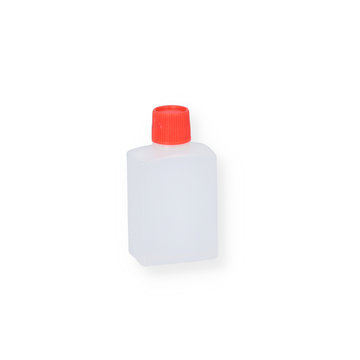
Small sauce containers are a useful addition to sushi packaging. They’re suitable for soy sauce, teriyaki, sweet chili sauce, mayonnaise, wasabi, or other dips. Separate packaging allows customers to decide for themselves how much sauce to use.
Make sure to use the correct capacity and a compatible lid. The sauce cup should not be filled to the brim. Before serving, check that the lid is completely closed, and transport the container upright whenever possible.
Differences from Other To-Go Packaging
Sushi packaging or Asian-style boxes?
Sushi containers are flat in design and intended for the neat presentation of individual sushi pieces. They are particularly suitable for cold dishes such as maki, nigiri, sashimi, and inside-out rolls.
Asian boxes for noodle, rice, and wok dishes, on the other hand, have a taller shape. They are primarily intended for hot dishes with a predominantly firm consistency.
Sushi boxes or salad bowls?
For salads, poké bowls, fruit, or larger loose portions, salad bowls and takeout salad boxes usually offer more interior height. Sushi boxes, on the other hand, are better suited for the flat and orderly presentation of individual pieces.
Sushi boxes or meal bowls?
If hot main courses and several side dishes are to be served together or separately, meal trays for main courses and side dishes are the more suitable solution. Sushi packaging is more geared toward cold dishes and visual presentation.
Sushi Packaging for Restaurants and Delivery Services
Our sushi boxes are designed for professional users who want to present food attractively and prepare it safely for takeout. Typical applications include sushi restaurants, Asian takeout spots, delivery services, deli counters, supermarkets, catering, cafeterias, and events.
In addition to classic sushi, suitable designs can also be used for sashimi, onigiri, cold appetizers, desserts, or deli items. Always check to ensure that the dimensions, material, and interior finish are appropriate for the specific dish.
Matching Accessories for Sushi Sales
- Chopsticks for sushi and Asian dishes
- Napkin dispensers for restaurants and delivery services
- Paper carry bags for takeout orders
- Asia boxes for hot noodle and rice dishes
- circ Reusable packaging for takeout
FAQs on Sushi Packaging
Which sushi packaging is suitable for a single serving?
A compact, flat sushi box is ideal for a small single serving. The key factors are the internal dimensions and the size of your maki, nigiri, or sashimi. We recommend doing a quick packing test before using it regularly.
How do I find the right size?
Compare the packaging’s dimensions with your planned arrangement. Also take into account garnishes, wasabi, ginger, and any divider sheets. The sushi shouldn’t be squished, but it shouldn’t have too much room to move around either.
Do they include viewing windows or lids?
That depends on the model. Some sushi boxes have a built-in viewing window, while others come with a transparent lid. Check the contents of the package for the model you’ve chosen.
What are the advantages of a black sushi box?
The dark background creates a strong contrast with the rice, fish, vegetables, and toppings. This makes the colorful sushi components stand out particularly well.
What are the advantages of a brown sushi box?
Brown packaging with a kraft paper look has a natural and understated appearance. However, the color does not indicate any specific environmental or disposal properties.
Can soy sauce be transported directly in the sushi box?
Soy sauce should be packed in a separate sauce cup. This keeps the sushi dry and allows the sauce to be dispensed neatly.
Are there reusable sushi packaging options?
Yes, reusable sushi boxes are available for return and deposit systems. Reusable packaging is particularly suitable for businesses with repeat customers and an organized return system.
Is sushi packaging microwave-safe?
There is no one-size-fits-all answer. The viewing window, lid, and base of the container may be made of different materials. Only use a box in the microwave if it is explicitly labeled as microwave-safe.
Are sushi boxes biodegradable?
Not all sushi packaging is biodegradable. The base, coating, viewing window, and lid may be made of different materials. Therefore, check the specific product information.
How should filled sushi boxes be transported?
Transport sushi boxes horizontally, in a cool place, and secured to prevent slipping. Lids or viewing windows must be completely closed. Liquid sauces should be packed separately and kept upright.
What distinguishes sushi packaging from Asia boxes?
Sushi packaging is flat and designed to display cold sushi specialties. Asian-style boxes are taller and are better suited for hot noodle, rice, and stir-fry dishes.